
| Motor horse | 0.12–75kw | Insulation Class | F |
| Voltage | 110/220/380/440/600/660V | Wind material | 100% Copper |
| Output Phase | Single or Three phase | Shaft diameter | 11–50mm |
| Frequency | 50/60hz | Warranty | 12 months |
| Output RPM | 2/4/6/8/10P | HS CODE | 8501109990 |
| Cast material | Aluminum or Iron | Customized design | Accepted |
| Variable speed range | 30–1300RPM | Specification | Standard or Customized |
| Protection Class | IP55 | Original | China |
| Duty | S1 | Installation way | B5/B14/B34/B35 |
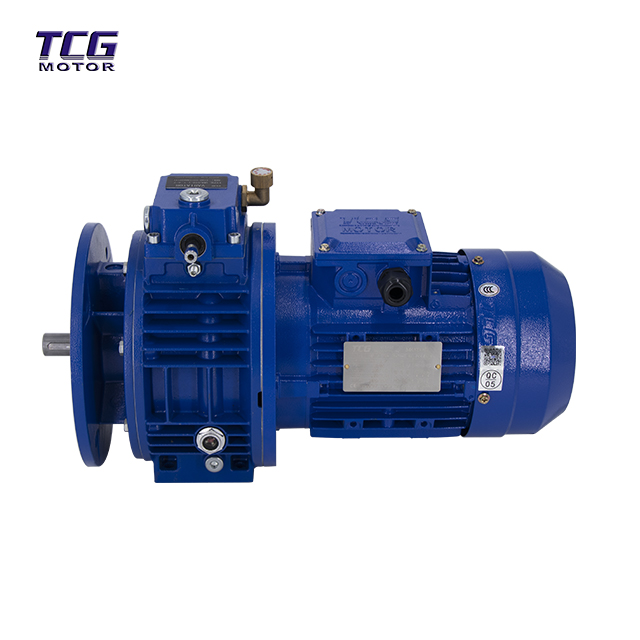
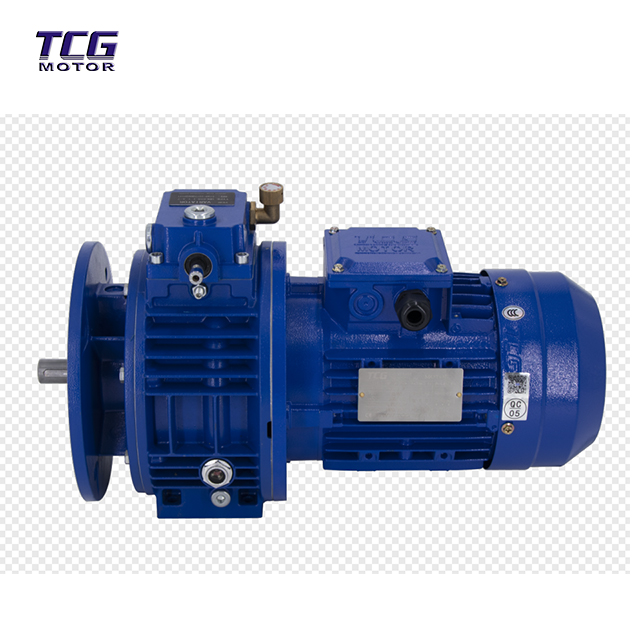
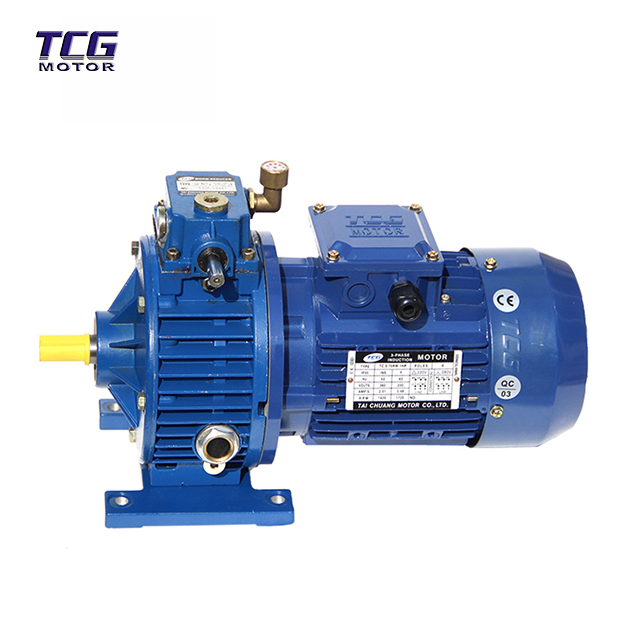

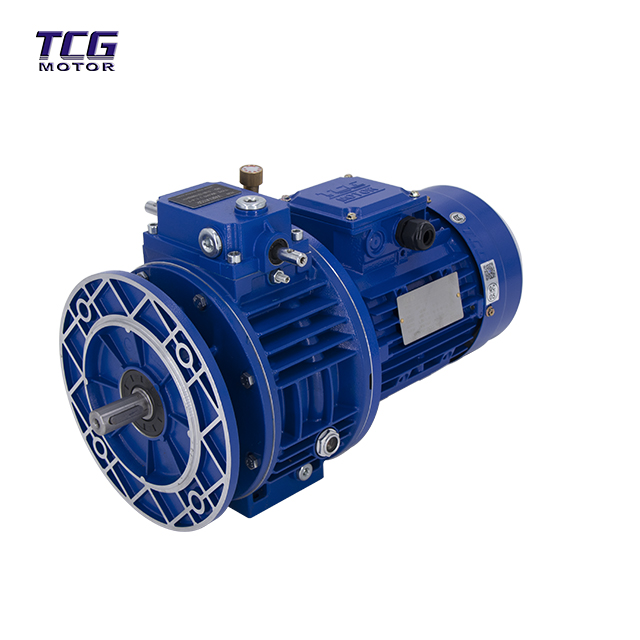
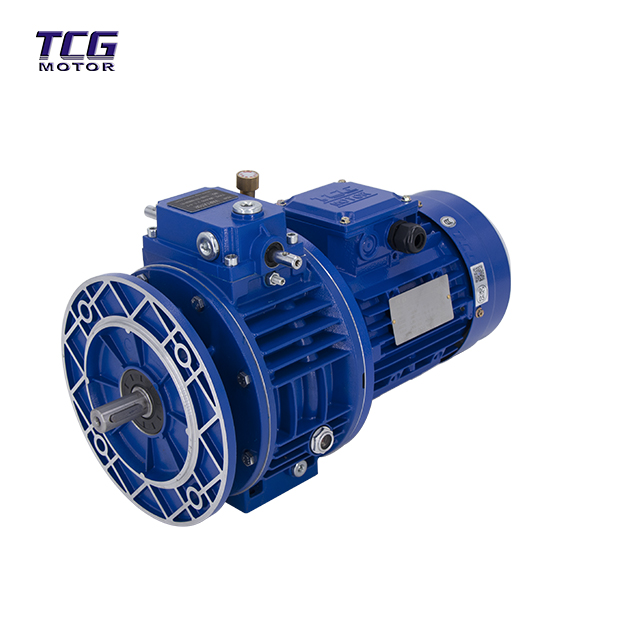
AC Gear Motor
Variable speed asynchronous motor
原价为:$265.00。$260.00当前价格为:$260.00。
Product Application Introduction:
Continuously variable transmission (CVT) has a wide range of applications in various fields, including industrial production equipment, agricultural machinery, and transportation equipment.
1.Industrial sector
In industrial production equipment, continuously variable transmissions are widely used in machine tools, printing machines, steel mills, and mining machinery. Due to its ability to achieve precise speed regulation, improve production efficiency, and save energy, the continuously variable transmission performs well in these devices, with a long service life and good stability.
2.In the field of agriculture
Agricultural machinery is another important application area of continuously variable transmission. Agricultural machinery requires real-time power adjustment in practical applications and often faces harsh working environments. The continuously variable transmission can work stably and reliably, playing a significant role in promoting agricultural production. Especially on tractors, continuously variable transmission technology (such as CVT) can provide a continuously adjustable speed, suitable for field operations such as deep plowing, sowing, and bundling, significantly improving work efficiency and productivity.
3.Transportation field
In transportation equipment, continuously variable transmissions also have important applications in cars, trains, and ships. It can improve transmission efficiency, reduce energy loss, and achieve higher speed and transmission accuracy. For example, in cars, continuously variable transmissions can provide smooth acceleration and deceleration, improving ride comfort.
Feature:
The characteristics of a continuously variable transmission mainly include the following aspects:
1.High strength and reliability: The continuously variable transmission has reliable performance and can rotate accurately when subjected to impact loads or machine reversals
2.Large speed range and high speed regulation accuracy: The continuously variable transmission has a large speed range, high speed regulation accuracy, stable performance, small size, and light weight
3.Special treatment of transmission components: The transmission components undergo special heat treatment and precision machining, with good lubrication at the friction parts, smooth operation, low noise, and long service life
4.Excellent interface characteristics: The interface characteristics of the continuously variable transmission are excellent, making it easy to change gears. During operation, regardless of whether it is under load or not, it can quickly and reliably change speed
5.Strong combination ability: The continuously variable transmission has strong combination ability and can be combined with various types of reducers to achieve low-speed and high torque transmission effects
6.Constant speed: Under allowable load conditions, the continuously variable transmission can be set to a constant speed
These characteristics make continuously variable transmissions perform well in various industrial applications, especially in applications that require high precision, high reliability, and high efficiency
Material:
The materials of a continuously variable transmission mainly include rubber belts and metal belts.
Rubber belt
Early continuously variable transmissions often used rubber belts, but their disadvantage was limited force and easy slippage, so they were mainly used in some micro cars and motorcycles. The strength and high temperature resistance of rubber belts are poor, and prolonged high-power output can cause slippage
2.Metal strip
In order to solve the problem of rubber belts, modern continuously variable transmissions often use metal belts. The metal belt can withstand greater torque, reduce transmission losses, and improve the reliability and durability of the continuously variable transmission by reducing wear and controlling temperature through lubricating oil
The metal belt continuously variable transmission achieves continuous continuously variable transmission by changing the contact position of the metal belt on the driving and driven wheels
.
Company Services:
We are a techlogy-based factory specializing in the AC/DC Motor production and trade of them.
At present, there are more than 25 years of company history and export experience.We cooperate with many well-known brand companies such as Medias,Bosch..
Professional customized one-stop optical solutions, including technical support, product customization and after-sales service. Through sustainable business operations in many countries and regions around the world, we provide technological innovation, supply chain and manufacturing solutions, and end-market product matching for various industries. Provide professional engineers and business teams, standardized mechanical equipment, controllable product quality, fast production speed, and efficient service feedback.
RFQ:
Q:What material of your motor wire?
A:Our motor wire is 100% copper.
Q:What brand of your motor bear?
A:Our bear brand is NTN or NSK or other brand as you requested.
Q:How long your motor can last?
A:If you use properly, not use in outside, then 5-8 years is no problem.
Q.Whether the output torque will be changed while changing the RPM?
A:The output torque will not be changed during changing the RPM.

评价
目前还没有评价